How pact upgrades work
Pact reforging can turn a spare skull into a stronger ability, but an unsuccessful ritual can destroy that skull. The HIS Magnum's Pact Department also lets you pursue different abilities through sidegrades. Decide whether you want a higher tier or a different pact before committing valuable items.
Pacts belong to the S.K.U.L.L. Project and have five tiers, from I through V. Higher tiers generally offer stronger, rarer abilities. However, a particular effect may matter more to your build than its tier: extra actions, resistance bypass, and ammunition support solve different problems.
Version 0.9.9, “Signed in Blood,” substantially reworked pacts. The official S.K.U.L.L. Project wiki page warns that its update is still in progress. Older descriptions of pact names and mechanics therefore need care.
Before reforging, collect skulls through these routes:
- Defeat Barons: They can drop pacts associated with their Bramfaturas, and can use those abilities against you.
- Defeat Terror Pack mercenaries: Dare Wolves and She-Wolves can carry and drop pacts.
- Explore Descents: Once the Magnum's Bramfaturan Engine is unlocked, Descents provide access to powerful Tier IV and V pacts.
A Steam community analysis of reforging describes a ritual using one central skull and five surrounding components. Its author explicitly warns that the code analysis may contain mistakes; the detailed numerical model has not been officially confirmed.
For a practical starting routine, choose a spare skull, identify the ability you want, inspect each component's essence statistics, and arrange the five components with their affinities in mind. Reforge before absorbing the result into an operative when possible.
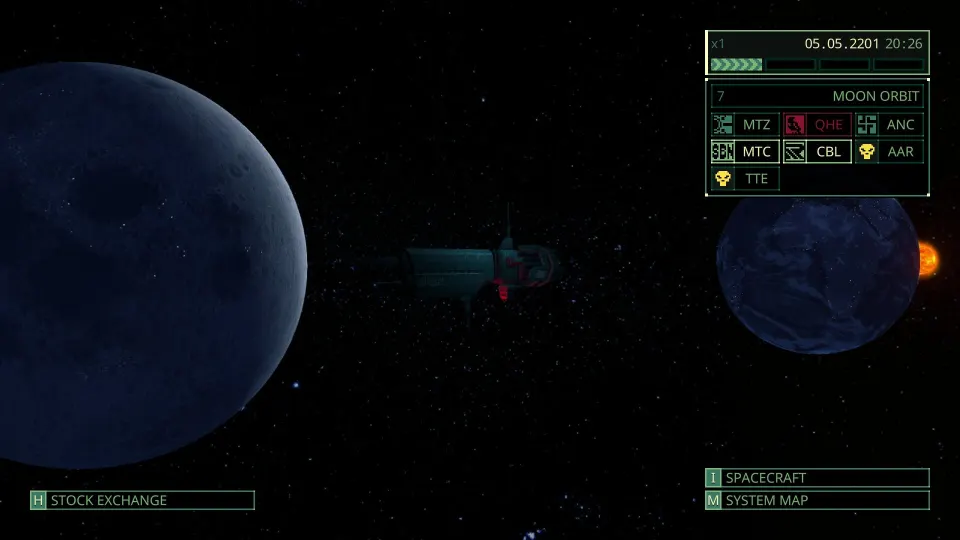
Reforging outcomes and their risks
The community analysis describes five possible results. An upgrade changes tier, while a sidegrade changes the pact within the same tier.
| Outcome | Reported result | What it means for your plan |
|---|---|---|
| Jackpot | A two-tier jump | A larger improvement than a normal upgrade |
| Upgrade | The next-tier skull | Progress toward a stronger pact |
| Sidegrade | Another skull of the same tier | Access to a different ability or pact family |
| Downgrade | The previous-tier skull | Loss of tier progression |
| Disenchant | Skull destruction with a consolation item | Loss of the pact you submitted |
In this model, upgrade probability starts from Power% × Stability%. High power with low stability favors sidegrades, while low power with high stability favors downgrades. Poor stability also contributes to the risk of disenchantment.
The analysis reports a 70% cap on the ordinary upgrade result, with excess upgrade probability feeding the jackpot result. Outcome weights are then normalized before the roll. These details describe the proposed calculation, not a universal success rate for every ritual.
Tier I skulls reportedly cannot downgrade. Their downgrade probability instead becomes disenchantment probability, so starting at the lowest tier does not protect your skull from loss.
For repeated attempts, keep a usable pact available and experiment with duplicates. This is especially helpful when pursuing a sidegrade: a same-tier result can be the goal, but repeated attempts may still cost several skulls. Player reports of roughly 10–20% sidegrade chances describe individual experiences, not a fixed rate for every combination.
Balancing power, stability, and essence order
Power and stability work together. According to the community model, each total is divided by a requirement for the input skull's tier, and each resulting percentage stops at 100%.
The reported requirements are:
| Input skull tier | Power for 100% | Stability for 100% |
|---|---|---|
| Tier I | 600 | 100 |
| Tier II | 750 | 125 |
Higher-tier requirements have not been officially confirmed here. Avoid extending these figures into a guessed progression when planning expensive attempts.
For example, a Tier I ritual with 1,000 power and 75 stability would count as 100% power and 75% stability under this model. The extra 400 power would provide no further benefit to Power%. Improving stability would address the remaining shortfall.
How component contributions are calculated
Each component has an essence type, base power, and base stability. Its contribution reportedly depends on two directional relationships:
- The essence of the previous component affecting the current component.
- The essence of the current component affecting the central skull.
Calculate power by multiplying the component's base power by the power multiplier for each relationship. Calculate stability separately using the corresponding stability multipliers. Add the contributions from all five components, plus any applicable flat bonuses from ship upgrades.
The outer slots form a clockwise ring. Each component therefore has a predecessor, including the component connected across the closing link of the circle. Rearranging the same items can change their contributions.
Why stronger affinities can create weaker rituals
Affinity affects power and stability differently. These examples come from the reported community affinity table:
| Directional essence relationship | Power multiplier | Stability multiplier |
|---|---|---|
| Eon → Eon | 1.0 | 1.0 |
| Eon → Shavva | 2.2 | 0.2 |
| Eon → Siaira | 0.5 | 1.4 |
Eon feeding Shavva sharply increases power while reducing stability. Eon feeding Siaira has the opposite emphasis. These multipliers apply to individual relationships; they are not the final multiplier for the entire ritual.
When arranging components, identify which total is falling short. A power-heavy arrangement may need a stabilizing relationship more than another power boost. Conversely, a stable ritual with insufficient power still has unfavorable outcomes in the reported model.
Check both links affecting each component before judging it by its base statistics. A large base number can become less useful after unfavorable multipliers, while a modest component may fit the arrangement better.
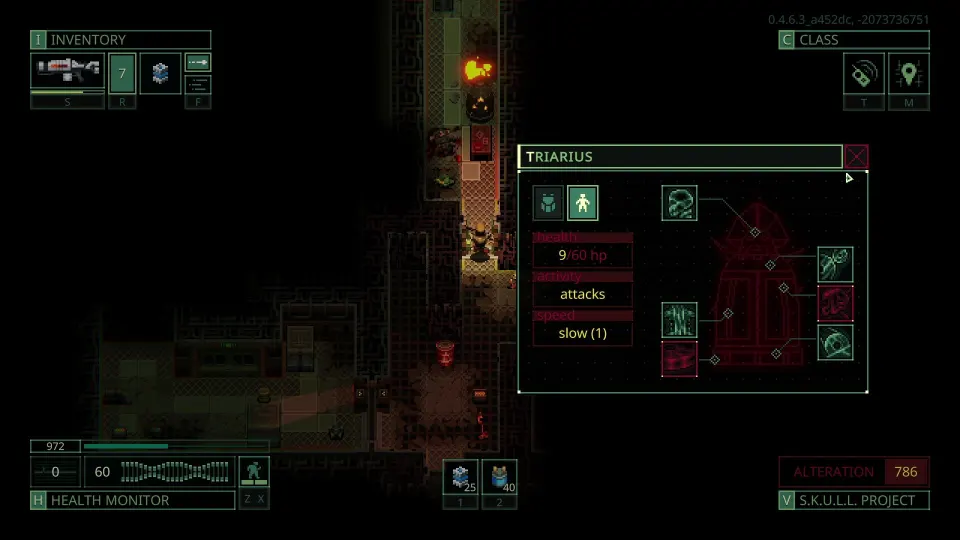
Choosing a pact worth upgrading
Choose an ability that addresses your operative's actual weakness. An ammunition-hungry weapon benefits from a different pact than a melee build struggling to reach enemies.
The following examples are described in a community discussion of notable pacts. Their routes and effects are player-reported, and the listed family relationships are not guaranteed ingredient recipes.
| Desired pact | Tier | Reported sidegrade route | Main benefit |
|---|---|---|---|
| Shinar's Cruel Statute | I | Brass → Bronze Pacts of Ur | Attacks bypass target resistances for 4 turns |
| Topiltzin's Maim Mark | II | Blood → Ritual Pacts of Gannix | Deals 44–88 lacerating damage and amputates 2 body parts |
| Shinar's Endless Armory | III | Brass → Bronze Pacts of Ur | Adds 50% ranged damage and unlimited ammunition for 6 turns |
| Mujtahid's Fast | IV | Sand → Alchemy Pacts of Shartamakhum | Actions spend satiety at 100 kcal per AP until satiety reaches zero |
| Ash | V | Granite → Red Pacts of Ur | Burns all enemies on the floor and causes panic for 4 turns |
These examples show why a sidegrade can be worth pursuing. Shinar's Cruel Statute offers resistance bypass at Tier I, while Endless Armory supports weapons that consume substantial ammunition.
Some useful pacts also come directly from enemy drops. Faris Tempo is a Tier I option reported to grant two additional AP for four turns. Itzpapalotl Blood Debt is a Tier II option reported to grant 40 shield points whenever a visible enemy dies during its six-turn effect.
Before spending several skulls, compare your current ability with the intended replacement. Consider activation opportunities, the weapons you carry, and the additional Bane buildup associated with higher tiers. A useful existing pact gives you room to gather duplicates before chasing a specialized result.
FAQ
Is a quasimorph pact upgrade guaranteed with enough power?
Power alone does not guarantee an upgrade in the reported reforging model. Stability also matters, and both percentages are capped. Once power reaches its requirement, adding more does not compensate for insufficient stability. The exact probability calculations remain community findings that have not been officially confirmed.
Can I reforge a pact after an operative absorbs it?
The described ritual uses a skull item in the Pact Department. Absorption binds a pact to an operative, who can use only one pact at a time. That bond survives death and re-cloning. Reforging an already absorbed pact through this ritual has not been officially confirmed, so plan your skull's route before absorption.
What drawbacks come with higher-tier pacts?
Higher-tier pacts add more Bane Charge when used. The official wiki lists Bane activation thresholds at 1, 200, 400, 700, and 1,000, with effects determined by the pact's home Bramfatura. Existing penalties can also strengthen as the level rises.
The wiki reports that Quasimorphic Data reduces Bane Charge by 300 per item. Completing missions also reduces it according to the Magnum's pact recovery value. Include this ongoing burden when evaluating an upgrade.
Does upgrading change how pact charging works?
Pacts require Pact Charge, which increases as Quasimorphosis rises. Items that raise Quasimorphosis can also charge pacts, and charge can build even when the Quasimorphosis meter is full. Missions with Absentia prevent recharging, although stored charge remains available. Account for that restriction before relying on repeated pact use during a mission.